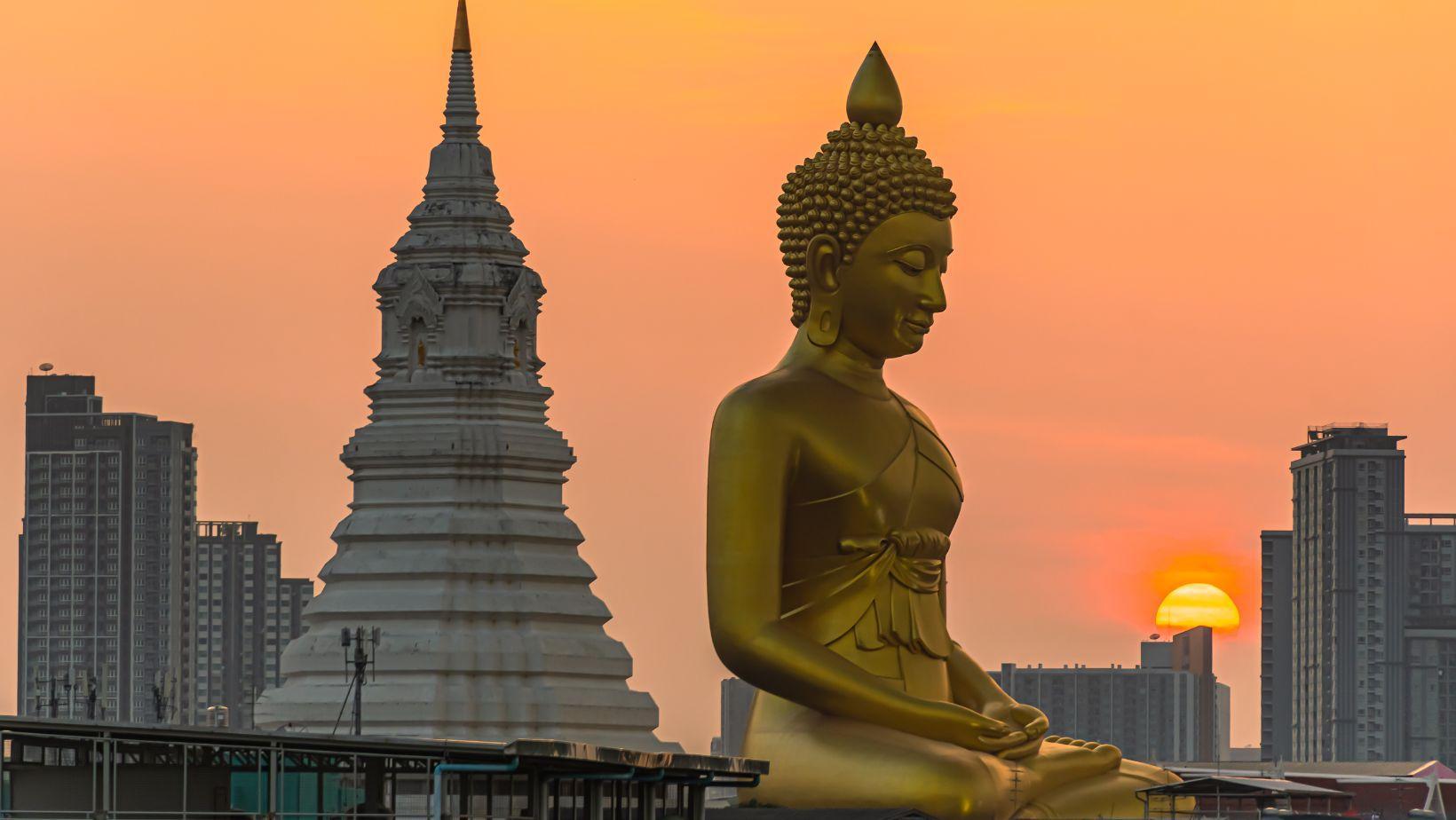
Large Buddha statues capture your imagination because you can almost always sense there’s a story behind them: a place, a tradition, a maker, and an intention. If you’re diving into big buddha statues, it really helps to understand how origins are recorded across Asia—and how you can recognize authenticity without jumping to quick conclusions.
Origin isn’t about “big and impressive.” It’s about meaning, context, and craftsmanship. And that’s exactly where it starts: with the combination of region, material, stylistic period, and the traces of use over time.
Origin starts with region, tradition, and function
A large Buddha statue is rarely made “just because.” In many Asian traditions, its function is tied to its setting: temple compounds, monasteries, or pilgrimage routes. You’ll see that reflected in the choices makers make—like the posture (for example, seated), the proportions, and the level of finish.
That’s why origin goes beyond a country label. It’s about regional workshops, local iconography, and ritual practices. Statues meant to mark or protect a place often carry clearer symbolism and a more formal execution, while statues intended for more enclosed spaces can be subtler in detail and patina.
Style traits often linked to origin
You can often approach origin through visual language: facial expression, earlobes, hair curls, the shape of the ushnisha, and the way the robes fall. These features shift over the centuries and vary by region. Don’t treat it like a checklist—see it as a visual language you get better at reading over time.
Materials and making methods: what they tell you (and what they don’t)
With large statues, material plays a leading role because it directly affects weight, durability, and restoration options. Bronze, for instance, can show traces of casting seams, old repairs, or a patina that builds slowly over time. Stone and wood tell different stories: stone through chisel marks and weathering; wood through grain, shrinkage, old joinery, and signs of insect activity (which you shouldn’t automatically equate with “old, therefore good”).
At the same time, material alone isn’t proof of age. Modern techniques can convincingly mimic an aged look, and genuinely old statues may have been partially restored. So you’re looking for consistency: does the technique match the supposed period and region, and do wear, oxidation, and details make sense together?
Patina and wear as a time signature
Real age often shows up in layers: not one flat discoloration, but a build-up of handling marks, touch, dust settled into deeper details, and subtle differences between exposed and sheltered areas. With large statues, that’s especially interesting because they’ve often been moved—or stood for a long time in temple environments with smoke, humidity, and ritual contact.
Provenance and authenticity: how to approach it smartly
If you take origin seriously, you look at provenance: the traceable background of a statue. That can include documentation, old photos, collection history, export paperwork, or restoration reports. If you don’t have a perfect file, you can still stay sharp by asking the right questions: how did the chain of ownership run, where did the statue stand before, and what interventions have been done?
Authenticity also isn’t only about “how old is it?”—it’s about integrity. Is the statue technically and conceptually one coherent whole, or do you see signs that parts were added later to make it look older or more complete? With monumental statues, that matters even more, because separate elements (like the base, halo, or hands) sometimes have their own history.
Cultural context: respectful placement and meaning
The origin of large Buddha statues is cultural, too. Mudras (hand gestures) and postures carry meaning, and that meaning is often tied to temple use and ritual. When you understand that, you start looking differently: you don’t just see an object, you see a carrier of tradition.
That context also helps you handle a statue respectfully—whether you see it as art, heritage, or a spiritual symbol. And especially with the largest statues, you can really see how tightly scale, devotion, and craftsmanship are intertwined across Asia.