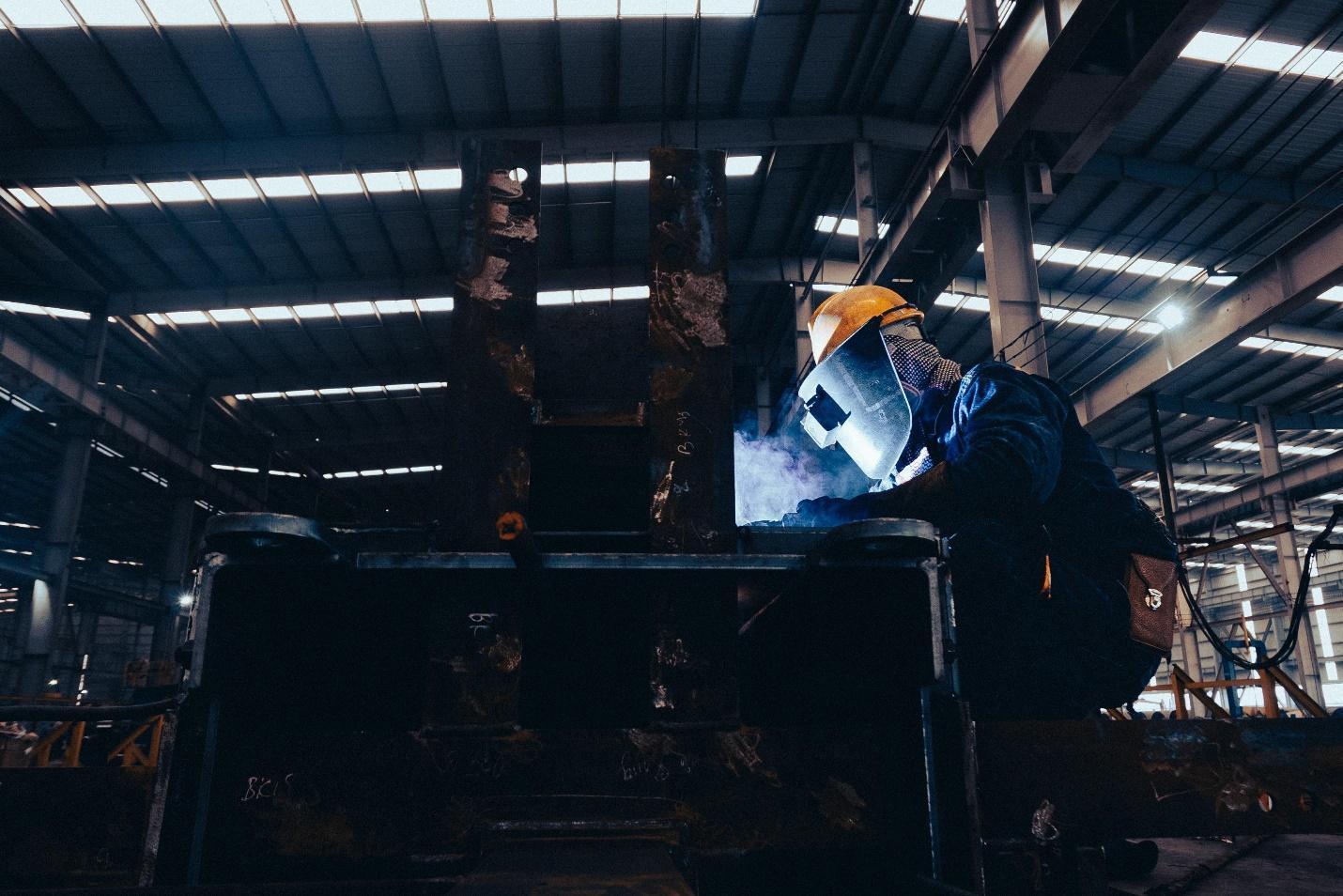
In heavy engineering and industrial fabrication, weld quality directly affects structural reliability. When a weld fails, the consequences can include equipment breakdowns, production downtime, and safety risks for operators. In industries such as mining, transport, construction, and manufacturing, many structural components rely on welded joints to carry heavy loads while operating under harsh conditions.
That is why many engineering companies rely on specialised welding services rather than general fabrication. Specialised welding combines technical expertise, structured procedures, and industry experience to produce welds that can handle extreme stress, vibration, and fatigue.
For businesses sourcing welding services, choosing the right provider involves more than comparing quotes. It means assessing the provider’s experience, technical capability, facilities, and quality processes.
This guide explains the key factors that determine whether a welding provider can deliver reliable, high-quality results for complex engineering projects.
What Specialised Welding Means in Industrial Engineering
Specialised welding is used for structural, high-load, or technically complex components where reliability is critical.
In heavy engineering, welding is not just a way to join metal parts. It is a structural process that affects whether a component can safely handle the loads it was designed for. For example, the welded joints in a trailer chassis or mining equipment frame must support heavy loads while absorbing vibration and repeated stress during operation.
Industries that frequently require specialised welding include:
-
mining equipment manufacturing
-
transport trailer fabrication
-
structural steel construction
-
industrial machinery production
A practical example is a large transport trailer used in mining. These trailers often carry ore, gravel, or other bulk materials, and their frames depend on strong welds to remain stable under repeated loading and vibration.
If weld penetration is insufficient or heat input is poorly controlled, cracks can develop over time. Weld penetration refers to how deeply the weld fuses into the base metal. If the weld bonds only the surface layers instead of fully penetrating the joint, the connection may weaken under repeated stress. Small cracks can then grow and eventually compromise the structure.
Specialised welding reduces these risks through proper procedures, correct filler materials, and careful control of heat and joint preparation.
Why Welding Quality Directly Affects Equipment Reliability
Weld quality has a direct impact on how safely and reliably industrial equipment performs.
In many engineered components, weld joints are the points where structural loads are transferred. If those joints fail, the entire system can be compromised.
Poor welding can lead to issues such as:
-
insufficient weld penetration
-
weld cracking under fatigue stress
-
structural distortion caused by excessive heat
-
weakened heat-affected zones
These problems are not always obvious during a basic visual inspection. A weld may look clean and uniform on the surface while still containing internal weaknesses such as incomplete penetration or trapped defects. In many cases, those weaknesses only appear after months of repeated loading and vibration.
This is a common reason heavy equipment develops structural problems in service. Mining and transport equipment operate under constant vibration, heavy loads, and repeated stress cycles. Under those conditions, weak welds can develop fatigue cracks that gradually spread through the structure.
Some buyers assume a weld that looks neat must also be sound. In practice, appearance alone is not enough. Weld quality also depends on fusion, penetration, heat control, and process consistency.
High-quality welding services reduce this risk from the start. Proper preparation, correct technique, and consistent inspection help components remain reliable throughout their service life.
Choose Welding Providers with Proven Industrial Experience
Industrial experience is one of the clearest indicators of welding capability.
Welding thin sheet metal is very different from welding thick structural steel used in heavy equipment. Industrial fabrication often involves thicker materials, higher loads, and stricter structural requirements.
Engineering companies working in sectors such as mining and transport routinely weld components such as:
-
trailer chassis
-
structural support frames
-
heavy equipment components
These structures operate under significant stress. Providers with heavy fabrication experience understand how those stresses affect welded joints in real service conditions.
For example, when welding sections of a trailer chassis, weld placement and sequence must be planned carefully to avoid distortion. Experienced welders know how to balance weld size, heat input, and reinforcement to maintain structural alignment. In practice, that often means planning the order of welds across the structure so heat is distributed more evenly. Without that planning, the metal can warp during welding and cause misalignment in large components such as trailer frames.
A general welding shop may still be able to complete the job, but industrial experience matters when the finished component must perform under sustained load, vibration, and fatigue.
Evaluate the Skill and Certification of Welding Professionals
The quality of the final weld still depends heavily on the skill of the welder.
Even with modern equipment, welding requires precise technique and sound judgment. Skilled welders understand how different materials behave under heat and how welding parameters affect joint strength.
Professional welders working in specialised welding environments should be able to:
-
interpret engineering drawings
-
select appropriate welding processes
-
control heat input to prevent distortion
-
maintain consistent weld penetration
Different welding methods are used depending on the application. Common techniques include:
-
MIG welding for structural fabrication
-
TIG welding for precision work
-
flux-cored arc welding for heavy industrial applications
For example, welding thick structural steel requires careful control of heat input to prevent cracking in the heat-affected zone. The heat-affected zone is the area of metal next to the weld that changes because of welding heat. If this area becomes brittle, cracks may form when the component is placed under load. Skilled welders adjust travel speed, voltage, and filler materials to achieve the correct weld profile.
When assessing a provider, it is worth looking at both welder capability and the standards they work to. Skill, training, and experience all affect the consistency of the finished result.
Look for Structured Welding Procedures and Quality Control
Reliable welding work depends on more than individual skill. It also depends on structured procedures and quality control.
Professional engineering companies do not rely only on welder experience. They follow defined welding procedures that specify how each weld should be prepared and performed.
These procedures typically define:
-
joint preparation methods
-
filler material selection
-
welding parameters
-
inspection requirements
Documented procedures help maintain consistency regardless of which welder performs the work. They reduce variation between projects and make the process more repeatable.
Quality control measures often include:
-
visual weld inspection
-
dimensional verification
-
weld testing where required
For structural equipment, these checks matter because they confirm that welds meet the engineering requirements of the component.
Some smaller workshops rely on informal methods, especially for simpler jobs. That may be acceptable for low-risk fabrication, but it is not enough for structural components where reliability and safety matter. A provider with formal procedures and quality assurance systems is generally better positioned to deliver consistent results.
Assess Workshop Capability and Fabrication Equipment
Workshop capability can have a major impact on both weld quality and project efficiency.
Industrial welding often involves large components that require heavy-duty equipment and enough space to work safely. Welding large trailer bodies or structural frames, for example, requires lifting equipment and room to position or rotate the structure during fabrication. Providers working with structural steel also need proper access to weld joints so they can complete the work accurately.
A well-equipped fabrication workshop typically includes:
-
high-capacity welding machines
-
heavy lifting equipment
-
precision cutting tools
-
large fabrication areas for assembly
Without the right facilities, welds may need to be completed in awkward positions that reduce quality or increase the risk of distortion. Limited workshop capacity can also slow the job down and make handling large components more difficult.
For that reason, businesses should assess whether the provider has the infrastructure needed for large-scale industrial fabrication, not just the ability to perform basic welding work.
Why Material Knowledge Matters in Specialised Welding
Material knowledge is critical because different metals respond to welding heat in different ways.
High-strength steels and structural alloys behave differently from mild steel because their internal structure reacts differently to heating and cooling. If temperature control is poor, the material may lose strength or become brittle.
That is why specialised welding providers pay close attention to factors such as:
-
heat input
-
cooling rates
-
filler material selection
For example, excessive heat during welding can create brittle areas in the heat-affected zone. These areas may crack under stress, especially in equipment exposed to repeated loading.
Some people think welding is simply a matter of melting metal together. In structural applications, it is more precise than that. The wrong heat level or filler material can change how the base metal performs after welding.
By understanding the metallurgy of the materials involved, specialised welding providers can choose the right parameters to maintain structural integrity.
Repair and Maintenance Welding for Industrial Equipment
Specialised welding is also used to repair, reinforce, and extend the life of industrial equipment.
Heavy equipment experiences wear and fatigue over time, especially in high-stress areas such as brackets, frame joints, and load-bearing supports. Instead of replacing entire components, businesses often use welding to repair or strengthen damaged areas.
Repair welding can include:
-
repairing structural cracks
-
reinforcing high-stress areas
-
rebuilding worn components
-
restoring structural integrity
For example, a cracked structural bracket on transport equipment may be repaired through controlled welding rather than replacing the entire assembly. That can reduce downtime and lower replacement costs while returning the component to safe operating condition.
Repair is not always the right option. If the damage is extensive or the component has reached the end of its service life, replacement may be the better choice. But where the repair is appropriate, specialised welding can be a practical way to restore performance and extend equipment life.
How to Evaluate a Welding Service Provider Before Hiring
Choosing the right welding provider means evaluating more than price.
A lower quote may seem attractive at first, but it can lead to higher repair costs later if weld quality is inconsistent. In heavy engineering, the better question is whether the provider can deliver reliable, long-lasting work.
Key questions to ask include:
-
Does the company have experience with heavy industrial fabrication?
-
What welding processes do they specialise in?
-
Do they follow documented welding procedures?
-
Do they have the facilities to handle large structural components?
It is also useful to look for signs of a mature operation, such as engineering knowledge, fabrication capability, and experience with structural work in demanding environments.
Providers with the right experience, processes, and facilities are generally better equipped to deliver consistent welding quality. When welds directly affect structural safety and equipment reliability, choosing the right provider becomes an important operational decision.
Conclusion
Specialised welding plays an important role in the fabrication, repair, and maintenance of heavy industrial equipment. Weld quality affects structural integrity, equipment reliability, and operational safety.
Businesses evaluating welding services should look closely at industry experience, welder capability, documented procedures, workshop capacity, and material knowledge.
A provider that understands the technical demands of specialised welding is better equipped to deliver components that perform reliably in real operating conditions.
For companies working in demanding industrial environments, choosing the right welding partner is an investment in long-term equipment performance, safety, and reliability.